An independent forensic audit of the defense surveillance package, for plaintiff counsel only. You receive written findings and a deposition-and-discovery roadmap, prepared as non-testifying consulting work product and delivered before the package defines the claim.
Suit is filed. The defense puts an operator in the field, takes its footage, and builds the package around what that footage shows. Reserves are set against it. The posture hardens and the offer comes down. Then the package goes quiet. Production is demanded and slow-walked, and it has already moved the number by the time counsel is permitted to see it. It surfaces late, often near trial, leaving little time to test the chain, pull the metadata, and depose the people who produced it. By then, the only counter is an early, specific discovery demand — one built on knowing from the inside exactly what a complete package must contain and where it gets thinned. That knowledge is the difference between testing the package and inheriting it. The operator who shot it is no neutral witness. The package is one side’s work — retained and paid by the defense, brought back when the footage delivers what they can use and dropped when it doesn’t, then offered as objective record. The first independent eyes on it are the audit’s.
Defense surveillance is rarely a smoking gun. Its real function in personal injury, workers’ compensation, and FELA litigation is leverage: the threat of jury exposure that drives settlement posture before the package’s actual evidentiary weight is ever tested.
The discipline emerged in the mid-1980s, when affordable camcorders put surveillance within the defense bar’s reach. A few hours of footage capturing the injured party in motion was often treated as more authoritative than medical records, treating-physician opinion, or the lived reality of the injury, because it had no opposition. No second camera. No forensic challenge. The reserves dropped, and the case settled below its value.
That authority was never only about the absence of opposition. Visual beats verbal in human cognition — the picture superiority effect, among the most replicated findings in memory research: people retain what they see far longer and more vividly than what they hear or read. The eight seconds of the plaintiff lifting a bag outlast the four hours of medical testimony that came before it, and the plaintiff has no equal exhibit to set against it. That is the asymmetry the audit exists to correct.
That era is ending. Every other category of consequential evidence in an injury case is routinely put to the test: medical findings by opposing examination, and accident reconstruction, vocational capacity, and damages economics each met by an expert the other side retains to challenge them. The surveillance package has been the exception — produced by one side, and received without an independent forensic challenge built to meet it. The timing is not incidental: as AI makes video and reporting easier to alter and harder to authenticate by eye, footage and reporting once trusted because a camera and a human produced it is exactly what now needs to be tested by independently before its trusted.
The surveillance package is the last that hasn’t been routinely subjected to that discipline. Until now.
Tested Before Trusted.
The Weston Sub Rosa Audit™ is that layer, retained by counsel, independent of the vendor, the carrier, the TPA, and the defense strategy built around the package.
Surveillance evidence carries varying levels of operational reliability, rarely tested independently, almost never by a reviewer with operational experience inside the carrier-defense workflow that produced it. The audit examines the package across seven dimensions, surfacing where reliability holds, where it does not, and where the package’s influence on case posture exceeded what the evidence supports.
The defense surveillance package disclosed in discovery is rarely the original capture. Between camera and counsel, it passes through field-investigator processing, firm-level intake, editorial workflows, and production decisions, each operational, each rarely examined independently before the package begins influencing case value, mediation posture, and litigation strategy.
The leverage event often occurs before plaintiff counsel receives the package. The carrier has watched it. Reserves have moved. The settlement posture has changed. By the time the package reaches discovery, the version disclosed is the version the firm decided to produce, and the leverage it created has already been priced into the defense’s position.
The Weston Sub Rosa Audit™ examines seven dimensions. Each covers a discrete area of institutional integrity in the surveillance package. When findings are returned, the Litigation Pathway tier identifies the procedural and evidentiary pathways those findings open for counsel.
The Weston Sub Rosa Audit™ identifies findings within each dimension, classifies them by Litigation Pathway tier, and provides counsel with a targeted list of discovery to compel and deposition issue areas for further legal development.
That targeting is the difference between a broad demand and a request the defense cannot easily wave off. Because the audit is built by someone who spent three decades assembling these packages on the defense side, it identifies what a surveillance operation of a given type actually produces, and who in the production chain handled each piece: raw field footage, per-day field reports, the originals behind the produced copies, vendor and subcontractor records, licensing and tasking documents. Counsel can use that map to frame a production request in specific, named categories tied to materials that demonstrably exist, rather than the sweeping any-and-all demand that invites the standard overbroad-and-burdensome objection. Particularity of that kind is harder to defeat with a generic burden response.
Deposition strategy, motion practice, and case development remain the work of retained counsel. The audit delivers the forensic intelligence; counsel delivers the litigation.
Examination of how source evidence was captured and preserved, and whether the file produced in discovery traces back through an intact chain to the original recording.
Findings may support motions in limine on authentication grounds under FRE 901, motions for sanctions under FRCP 37(e) where native capture was not preserved, adverse inference instruction requests, and best-evidence challenges under FRE 1001–1006. Authentication framework authority includes Lorraine v. Markel (D. Md. 2007). Contemporary 37(e) authority includes Pratt v. Robbins (W.D.N.C. 2024).
Examination of what the disclosed file shows about its own production history, and whether that production history was independently documented or left for the audit to reconstruct.
Pathways include motions in limine on authentication grounds under FRE 901, motions to exclude under FRE 403, and Daubert or Frye challenges to the authentication of edited media. The Lorraine v. Markel framework applies to electronically processed evidence.
Examination of whether the disclosed package represents the complete operational record, or whether selection decisions removed material the firm preferred not to produce.
Continuity findings may support motions to compel under FRCP 37(a), motions for sanctions under FRCP 37(b) and 37(e), adverse inference instruction requests, and bad-faith claim development. Applicable authority includes FRCP 26, 26(e), 34, and 37, with state-law equivalents under Florida Rule of Civil Procedure 1.380.
Examination of the lawfulness, license status, and scope of methods deployed against the surveilled party, including the conduct of the field investigator and the scope of intrusion.
Operational findings may support independent civil claims for common-law trespass and intrusion upon seclusion, punitive damages exposure where statutorily permitted, motions to exclude tainted-source evidence, and referral to state PI licensing authorities. Applicable authority includes Restatement (Second) of Torts § 652B, state PI licensing statutes including Florida Chapter 493 F.S., common-law trespass doctrine as applied in Furman v. Sheppard, and civil-side GPS-placement exposure under Villanova v. Innovative Investigations.
Examination of whether the investigator’s report aligns with the field work it purports to describe, and whether the narrative material misrepresents what is actually shown.
Where the report does not align with the field work it purports to describe, plaintiff counsel may pursue impeachment of the investigator at deposition, motions in limine on report admissibility under FRE 403, cross-examination foundation for jury credibility arguments, and bad-faith claim survival arguments where material misrepresentations supported claim-handling positions. State bad-faith authority applies, including Florida F.S. 624.155.
Examination of whether the package produced in discovery represents the complete record the defense generated, or whether material was withheld, redacted, or selectively staged.
Disclosure-side findings may support motions to compel under FRCP 37(a), sanctions under FRCP 37(b) and 37(e), adverse inference instructions, preclusion of defense use of surveillance under FRCP 37(c), bad-faith claim development, and in extreme cases default judgment exposure. Applicable authority includes FRCP 26, 34, and 37, the spoliation doctrine, and Pratt v. Robbins.
Examination of how the surveillance package was relied on in claim handling, and of the distance between what the package actually shows and the weight placed on it. This is the dimension that connects the prior six to the reliance and extra-contractual questions counsel evaluates.
Reliance findings may support bad-faith claim survival in workers’ compensation and personal injury matters, independent extra-contractual exposure development, institutional pattern-of-practice evidence, and punitive damages exposure where statutorily permitted. Applicable authority includes Florida F.S. 624.155, California Insurance Code § 790.03, Texas Insurance Code Chapter 541, and analogous state authority.
Generative AI now sits inside the claim-file chain behind defense surveillance. At the field and firm layers, investigator reports often get AI-drafted, video processing routes through AI tools at the frame level, and AI-driven research on injured parties’ social media is routine. Higher in the chain — adjuster, TPA, defense-vendor, defense-counsel — AI tools handle medical record summarization, impairment analysis, reserves modeling, and disposition recommendations. Self-insured operations carry a distinctive exposure on top of all of this: in-house claims professionals select and direct vendors outside the carrier-to-TPA-to-counsel oversight chain that otherwise constrains how AI gets used.
Where AI exposure intersects the surveillance package or the claim-handling decisions reliant on it, the audit examines two things: the reliability of what AI produced, and the confidentiality posture around what was uploaded to public-pipeline tools during the file’s handling. Findings surface within whichever of the seven dimensions the underlying integrity question attaches to.
AI-use findings may support authentication and reliability challenges under FRE 901 and FRE 702 where AI-touched or AI-generated material is offered without disclosed provenance; sanctions exposure under FRCP 26(g) and FRCP 37(e) where AI session logs constitute unpreserved electronically stored information; production demands under FRCP 34 reaching adjuster, TPA, self-insured claims, vendor, investigator, and defense-counsel AI platform transcripts as discoverable communications; and bad-faith claim development where claimant protected information was disclosed to public-pipeline AI platforms in the course of claim handling, implicating carrier confidentiality and unfair claim settlement practice authority including Florida F.S. 624.155, California Insurance Code § 790.03, Texas Insurance Code Chapter 541, and analogous state statutes. Foundational authority includes Mata v. Avianca, Inc., 678 F. Supp. 3d 443 (S.D.N.Y. 2023) on Rule 11 sanctions for AI-fabricated authority, Lacey v. State Farm General Ins. Co., 2025 WL 1363069 (C.D. Cal. 2025) within the insurance-coverage context, and contemporary authority including Gauthier v. Goodyear Tire & Rubber Co., 2024 WL 4882651 (E.D. Tex. 2024) and Coomer v. MyPillow, Inc. (D. Colo. 2025). Professional responsibility framework includes ABA Formal Opinion 512 (July 29, 2024) on confidentiality (Model Rule 1.6), competence (Rule 1.1), supervisory responsibilities (Rules 5.1 and 5.3), and candor to tribunal (Rule 3.3) duties governing AI use, with parallel state-bar opinions emerging across multiple jurisdictions. Federal judicial standing orders requiring AI-use disclosure in litigation filings continue to expand.
Litigation Pathway descriptions identify issue categories counsel may evaluate. They are not legal advice, outcome predictions, or exposure opinions. Counsel determines what action to take under the facts, findings, and controlling law.
The Weston Sub Rosa Audit™ is operational forensic review performed under attorney engagement as non-testifying consulting work product.
The audit does not provide legal conclusions, trial strategy, or disclosed expert testimony. Frame-level video forensics, forensic authentication of AI-altered or AI-touched media, and Daubert-qualified testifying expert work are outside the standard scope and referred to qualified specialists when indicated.
What plaintiff counsel can identify in a defense surveillance package before it defines the claim.
A forensic briefing for plaintiff counsel receiving defense surveillance in discovery. Built from three decades inside the defense surveillance industry, the operational experience that defense-side surveillance work has had structurally and plaintiff counsel has not. The briefing walks through what to look for when a surveillance package arrives: how the video was obtained, how the report frames it, what the package leaves out, where the operational chain behind it shows in the file, and where the claim-handling decisions reliant on the package may have exceeded what the evidence supports. When those issues surface, exposure can extend beyond the underlying claim — into settlement leverage, admissibility and impeachment, sanctions, and independent civil claims reaching the investigator, the firm, the carrier, and the employer.
Request the BriefingThe audit is built for matters where the surveillance package is doing real work against the claim — where it has already moved reserves, hardened settlement posture, or stands to anchor the defense at trial. It is not built for every file. The engagement is scoped to packages where a full forensic teardown is warranted, which is what the fee reflects. Capacity is held deliberately narrow so that each audit receives the depth the work requires.
The Weston Sub Rosa Audit™ is priced as a flat engagement fee against the analytical work performed on the surveillance package, not against the case value at engagement. Findings often surface evidence supporting exposure beyond the underlying claim — bad-faith claim survival, sanctions exposure, evidence exclusion, and independent civil claims reaching the investigator, the firm, the carrier, and the employer.
When those findings emerge, the matter the audit was retained on may carry materially different settlement posture than it carried at engagement. Counsel evaluating engagement should weigh the audit’s analytical work against the surveillance package’s operational profile, not against the case-cost ratio measured against pre-audit case value.
Each engagement applies the seven-dimension audit framework. Standard scope covers a defined surveillance package; operational scope expansion is structured under engagement letter terms.
Full audit across all seven dimensions of the framework on a standard surveillance package: up to 4 investigator-days of single-vendor surveillance cover (counted by individual field reports submitted, regardless of authorized hours per day), up to 10 hours of recorded footage in total, the field reports and investigator-prepared documentation tied to the assignment, background and pre-surveillance research where included in the disclosed package, and the carrier or counsel scope direction where produced in discovery.
Deliverable includes written findings classified by Litigation Pathway tier, deposition-ready question frameworks, targeted discovery topics, and one consultation call with retaining counsel. 21 business days from package receipt.
Standard turnaround is 21 business days from package receipt. When defense surveillance is disclosed late — within the deposition or trial window — Rapid Response is available across the core engagement at a $5,000 surcharge for delivery within 7 business days. Confirmed in the engagement letter at intake.
Hourly principal time for work outside the core engagement scope. Includes pre-engagement consultation, post-engagement consultative time beyond the included scope, specialist coordination and integration where audit findings indicate specialist work is warranted, video and document review outside the standard package, and supplementary analytical work as the matter develops. Specialist fees, when specialist engagement is warranted, are paid directly by counsel to the specialist under separate engagement letter.
Matters exceeding the standard scope are structured under engagement letter terms scoped against the specific operational reality each matter presents. Scope-expansion factors include additional surveillance days beyond the 4-day standard, footage volume above 10 hours, additional surveillance firms involved in the same matter, extended-duration surveillance operations, and multi-vendor cross-firm integration analysis.
Scope, structure, and engagement-letter terms are confirmed at intake before substantive work proceeds.
The fee is a recoverable case cost, advanced like any case expense under counsel’s contingency agreement and recouped from the gross recovery at resolution.
Surveillance is not unlawful merely because it is adverse, undisclosed, or uncomfortable. Injured parties should expect reasonable investigation when they place physical condition, activity level, and claimed impairment at issue.
But reasonable investigation has limits.
Courts and published legal commentary have long recognized that surveillance can cross the line when it becomes harassment, intimidation, trespass, deception, intrusion into private spaces, or an unreasonable interference with the injured party’s expectation of privacy. The operational mistake may begin in the field, but the exposure rarely stays there. It can travel through the footage, the report, the vendor, the carrier, the TPA, defense counsel’s reliance, and the litigation strategy built on the package.
The Weston Sub Rosa Audit™ is designed to identify whether the surveillance package contains those operational warning signs before the package is trusted as leverage.
As summarized in published Florida Bar commentary, Tucker is the first Florida case to address motion-picture surveillance in a personal injury claim. The court recognized the legitimacy of reasonable surveillance to investigate claimed injury, but also identified limits where surveillance becomes unreasonable, obtrusive, harassing, or intimidating.
The practical lesson is not that surveillance is prohibited. It is that surveillance must remain reasonable in method, vantage, contact, proximity, and intrusion. When the field method crosses that line, the footage may carry more than evidentiary value. It may carry exposure.
As reported in published legal commentary, the Illinois Supreme Court formally recognized the tort of intrusion upon seclusion and held the principal vicariously liable for the conduct of investigators it had retained, including a subcontracted agency that obtained the plaintiff’s personal phone records through a pretexting scheme. A jury awarded compensatory and punitive damages against the principal.
The principal does not receive a free pass by outsourcing field work to a vendor. When the vendor’s conduct creates exposure, the agency relationship carries that exposure upward, to the carrier, the self-insured, or the TPA that authorized, paid for, and relied on the package. A disclaimer of direct knowledge by the principal does not insulate the retention chain.
As reported in trade press and industry coverage, plaintiff filed a multi-billion-dollar civil action against American Family Insurance, defense law firm Baker Donelson, the retained private investigation firm Martinelli Investigations, and five individual investigators following the underlying personal injury matter. The complaint alleged that investigators repeatedly entered the plaintiff’s private property to install GPS trackers on her vehicles and a trail camera positioned to capture views of her residence. Critically, the surveillance was directed by senior carrier counsel under instruction documented in produced email correspondence, placing the surveillance package’s structural bias and direction-from-counsel architecture squarely inside the discoverable evidentiary record. Reported procedural events include the trial court’s exclusion of significant portions of the surveillance evidence, sanctions motions, and arrest warrants issued by the local sheriff for three of the investigators in February 2022.
Mezquital illustrates the structural cascade when field misconduct, methodology direction from counsel, and the discoverable communications behind the surveillance assignment surface together. The formal surveillance report’s claimed neutrality did not survive the produced emails. The package the defense paid to produce became the foundation for collateral civil litigation reaching every party in the surveillance retention chain.
“The most dangerous cases are not the ones where the investigator was caught doing something obviously illegal. The most dangerous cases are the ones where the investigator created just enough contamination to convert the surveillance package from impeachment evidence into a bad-faith and credibility narrative. A property-line intrusion. A tracker placement. A misleading edit. A bad timestamp. A thin disclosure. An unverifiable summary. A protected-content upload to a public AI pipeline.”
The audit identifies the contamination patterns after disclosure, when plaintiff counsel can act on them. The package the defense intended as impeachment evidence becomes the record plaintiff counsel uses to test the investigation behind it.
Bad-faith claim survival. Evidence exclusion. Sanctions. Independent civil claims for trespass, invasion of privacy, intentional infliction of emotional distress, and follow-on unfair claims practices, exposure categories the contamination findings may support, depending on the facts and controlling law of each matter.
The case references above are provided for informational purposes only based on published reported decisions and trade press coverage. Weston Intelligence is not a law firm. Nothing in this section is legal advice. Holdings, procedural posture, and current status of any cited matter should be independently verified by retaining counsel.
The work around defense surveillance is organized into separate disciplines, each real and each partial. Forensic labs authenticate footage. Field investigators know tradecraft. Claims and fraud professionals know how a carrier values and moves a file. Licensing sits with the state. The package passes through all of it: captured in the field, processed by a firm, relied on inside a claims operation, produced in discovery, but the reviewer who reads it almost never sits across the entire chain.
Carrier SIU. Sub-rosa direction at the TPA level. Fortune-500 self-insured vendor work. Two decades in the field. A licensed PI holding the FCLS credential. One reviewer across the entire chain — now reading the package for the side it was built against.
He did not study that system from the outside. He worked through it from the inside.
The side that controls the evidence controls the leverage. That structural fact ran through every high-exposure surveillance case Weston touched inside the carrier-side industry. It could not be corrected one case at a time from inside the system. What was missing was independent access to the same operational discipline the carrier-defense side uses to plan, capture, edit, interpret, and deploy surveillance evidence against the injured party, structurally separated from carrier and defense interests.
The audit was built for plaintiff counsel with the trial capacity to actually use it. When the audit operates, defense leverage realigns with what the surveillance evidence actually supports.
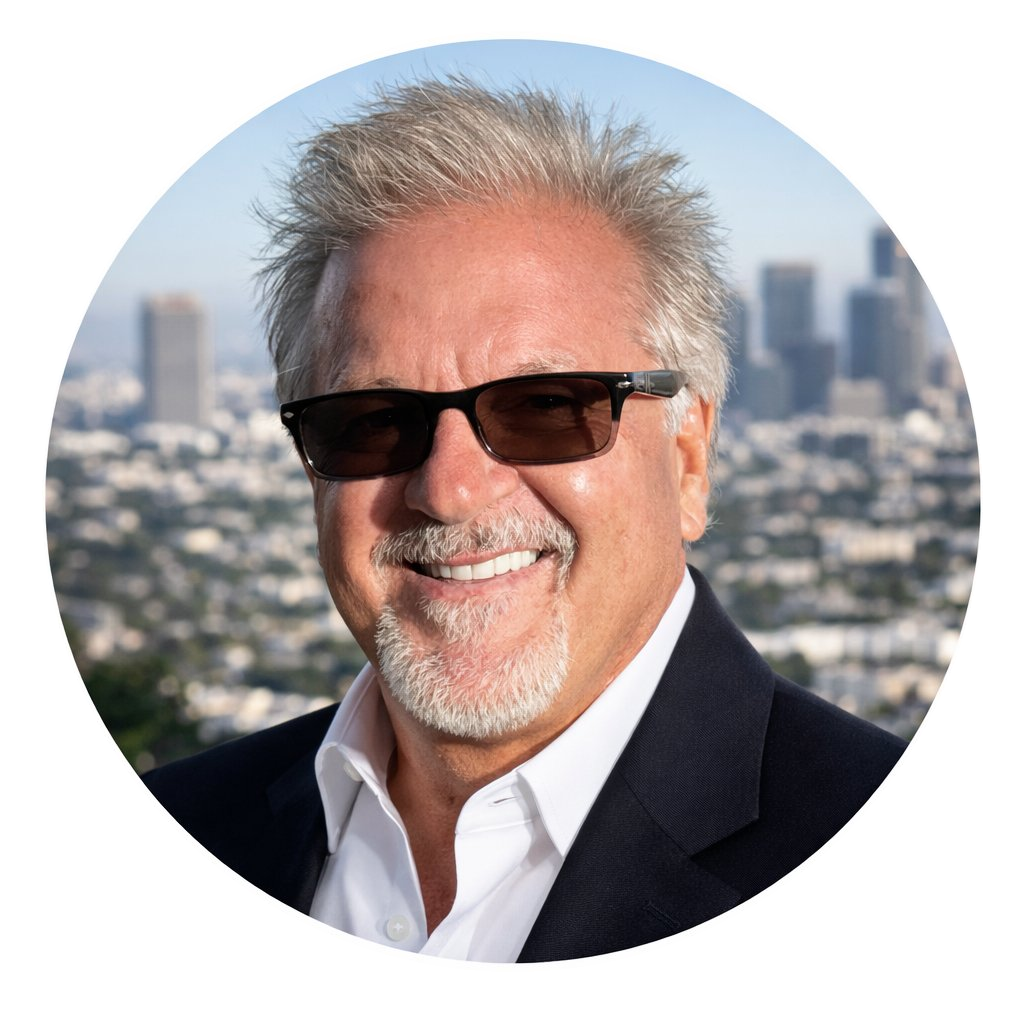
Founder of Weston Intelligence and architect of The Weston Sub Rosa Audit™.
For more than three decades, Richard Weston worked inside the insurance-defense surveillance system he now independently audits. His authority comes from two vantage points rarely held by the same person: the inside view of how surveillance is assigned, reviewed, and used in claim valuation, and the field view of how surveillance evidence is actually produced, documented, compiled, packaged, and relied upon. Weston did not study that system from the outside. He worked through it from the inside.
He began as a carrier-side SIU investigator, spending roughly a decade in the institutional claim environment — uncovering fraud and deception across the claim-handling process, assigning surveillance, reviewing returned product, and moving files through the internal review chain. In that role, he directed surveillance. He did not conduct it. He also holds the Fraud Claim Law Specialist (FCLS) credential, with formal training in the bad-faith and fraudulent-intent exposures that can run against both the carrier and the claim.
That changed at Gallagher Bassett and the matters that followed, where Weston began combining SIU-level direction with hands-on leadership of the field operations themselves, including some of the highest-exposure casualty losses.
Weston eventually left the carrier side over how surveillance vendors were being selected. Too often, assignments were driven by price, relationships, and panel placement rather than performance, experience, and evidentiary reliability. The work suffered for it.
In 2007, he founded Weston Intelligence Services to operate by the opposite standard — a boutique, volume-restricted practice known for recovering failed assignments where ordinary surveillance had fallen short and reliable video documentation was required to evaluate the loss properly. The work focused on complex, high-exposure casualty: trucking, construction, commercial, retail, and self-insured risk. Weston personally conducted field surveillance throughout the United States and on cross-border carrier matters.
His experience spans SIU work for international casualty carriers including AIG and Zurich, Fortune 500 self-insureds, and major third-party administrators including Gallagher Bassett — matters where surveillance quality directly affected valuation, reserve posture, mediation leverage, settlement pressure, and litigation risk.
Weston Intelligence Forensics is a separate plaintiff-side consulting practice. It conducts no surveillance. It accepts no carrier, defense, or insurer engagements of any kind. The work is non-testifying, attorney-retained consulting, performed under engagement letter exclusively for plaintiff counsel reviewing defense-produced surveillance packages. The separation is deliberate — and it is permanent.
That two-sided experience is the foundation of the audit.
For plaintiff counsel, that is the point of the audit. Test the package before it shapes the case, and before an injured party is pushed toward a reduced settlement the evidence may not support.
The Weston Sub Rosa Audit™ examines the surveillance package as a complete operational record across seven integrity dimensions: origin, editorial, continuity, operational, reporting, disclosure, and reliance.
The audit is driven by operational pattern recognition developed inside defense surveillance. It identifies failure patterns visible in the package itself, regardless of vendor, investigator, or agency.
That is the difference between watching the video and testing the package.
Three decades of operational experience on both sides of the surveillance desk — assigning and reviewing surveillance as carrier-side SIU, and conducting surveillance work as a vendor operator.
Test the surveillance before it becomes leverage.
Richard Weston is the named analyst on every engagement. The methodology and the standard the work is held to are his. The practice, though, is not a single point of failure.
Weston trained the team behind it to apply that standard, so capacity scales with demand and a time-sensitive matter never waits on one person's calendar. Where a matter needs depth beyond the audit's scope, such as frame-level video forensics, geospatial reconstruction, or authentication of altered media, senior specialists are retained for that matter and integrated under his direction. Counsel engages a practice, and its work product transfers cleanly to counsel at every stage.
Every engagement runs under attorney retention as non-testifying consulting work product. The audit identifies the operational and evidentiary issues in the package; counsel decides what to do with them.
Every Weston Sub Rosa Audit™ engagement begins with attorney-retained intake and an executed engagement letter. Matter submissions are reviewed personally by Richard Weston, FCLS, under the Intake and Conflict Protocol. No substantive review of the surveillance package begins until the engagement letter is executed.
The audit examines the surveillance package and the operational chain that produced it, not the footage in isolation. That means how the surveillance was ordered and tasked, how it was captured and by whom, what was selected and what was left out, the chain of custody on the originals, and how the written report and disclosures line up with the raw material. Counsel watches the video. The audit tests everything around it that the video depends on but does not show.
Every engagement is structured as attorney-retained, non-testifying consulting work product under Federal Rule of Civil Procedure 26(b)(4)(D) and its state-law equivalents. In practice the findings are developed for retaining counsel and protected from discovery as consulting-expert work product, and the analyst is not placed on a witness list. The protection is strong but not absolute. Specific conditions can pierce it, which is one reason legal strategy and any decision to convert to a testifying role stay entirely with counsel.
Because independence has to be structural, not asserted. A reviewer who takes work from both sides, or who positions as neutral while depending on defense referrals, carries the same credibility gap that gets defense-retained witnesses impeached. The practice audits defense surveillance packages only for plaintiff counsel, and takes no carrier, TPA, defense-firm, or self-insured engagements. That single constraint is what lets the work hold up under the scrutiny it is built to survive.
Generative AI now sits across the claim-file chain that produces and processes surveillance: investigator report drafting, video handling, record summarization, inter-party communications. Its use is rarely disclosed in the package as delivered. Undisclosed AI touches authentication, provenance, and preservation, and can open discovery counsel is entitled to pursue. The specific authorities are set out in the AI section of this site. The audit surfaces where AI appears to have entered the workflow; what to do with that is counsel's call.
The audit does not decide whether a plaintiff is injured; that is a medical question for medical experts. It does not render legal conclusions or admissibility decisions; those stay with retaining counsel. It is not field surveillance, not surveillance production, and not disclosed expert testimony. Frame-level video forensics and forensic authentication of AI-altered media sit outside the standard scope and are referred to qualified specialists when a matter calls for them.
Each prospective matter runs through a conflict check before any engagement letter is executed, and the plaintiff-exclusive rule means the practice will not later turn up auditing the other side of your case. Submitted material is handled as confidential and reviewed under attorney engagement. If a conflict surfaces, the matter is declined before substantive review begins.
Findings are documented by dimension and written for retaining counsel to act on. Depending on what the package reveals, they can support independent civil and bad-faith claim development, authentication challenges and motions tied to sanctions or evidence exclusion, and investigator impeachment. They also support discovery. Because the audit identifies what a surveillance operation actually generates and who in the production chain handled it, counsel can frame a production request in specific, named categories rather than a broad demand. That kind of particularity is harder to defeat with a generic burden objection. The audit supplies the factual and operational map; counsel decides what to file and frames the request.